
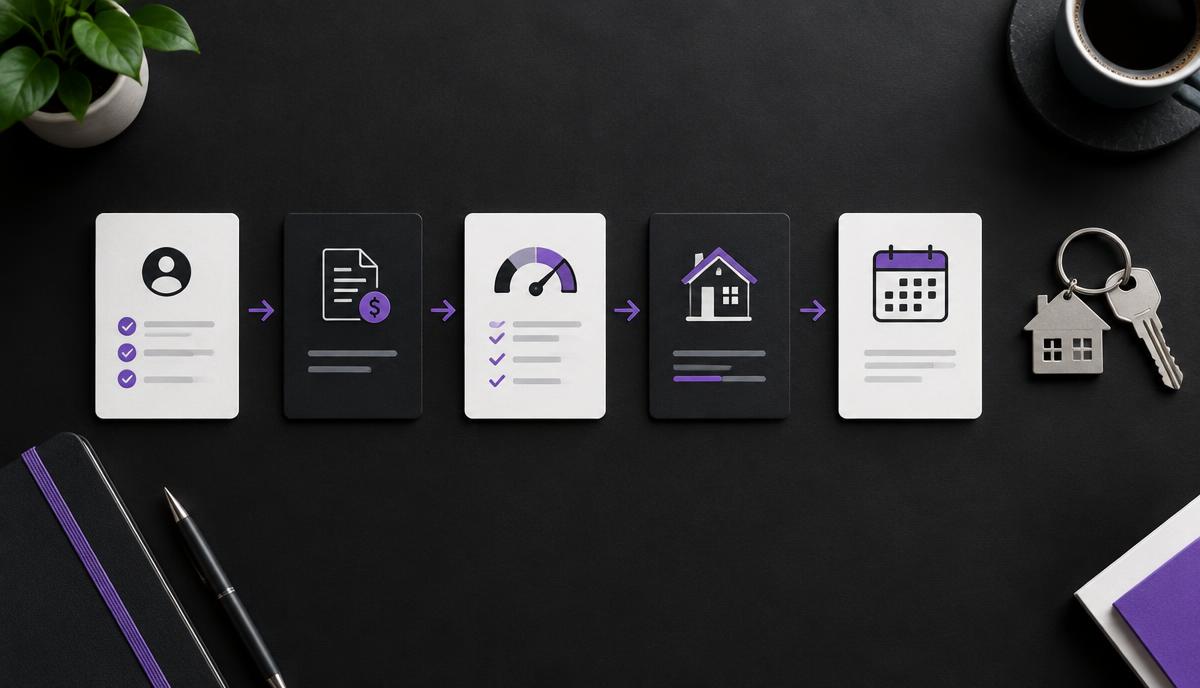
A mortgage funnel should not ask for everything at once. It also should not collect so little information that the sales team has no idea whether a conversation is worth pursuing. The best experience usually sits between those two extremes.
A basic name-and-phone form may produce a lot of submissions, but many will be early-stage researchers or people who are not ready to speak. At the other end, a long application asking for sensitive information can overwhelm someone who is still exploring their options.
A progressive questionnaire creates a more useful middle ground. It can begin with low-pressure questions about location and purchase timing, then move to estimated price range, intended occupancy, employment type, down-payment resources, and a self-reported credit band. The borrower sees one manageable step at a time, while the loan officer receives context before the call.
The questions must be written in plain language. “How soon are you hoping to buy?” is more natural than “Select your anticipated transaction window.” Explain why a question is being asked, avoid collecting sensitive information too early, and make it easy to go back or stop. A self-reported range is not a credit decision and should never be presented as one.
At the end, a borrower who is ready can choose a consultation time. Someone who is still researching can receive an appropriate educational next step, subject to consent and compliance requirements. That is better than forcing every visitor into the same sales path.
Good qualification is not about putting obstacles in front of borrowers. It is about respecting their time, reducing irrelevant follow-up, and giving the professional a better starting point for the conversation.